
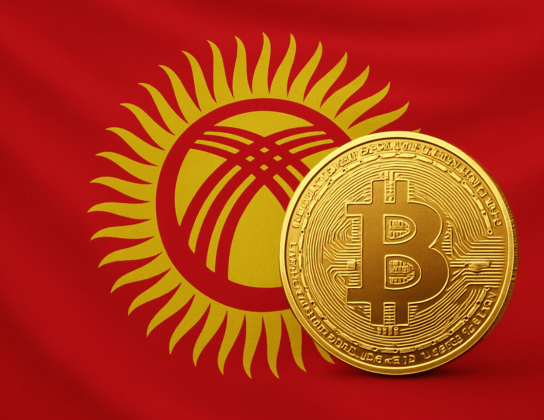
Kyrgyzstan is seriously considering creating a national Bitcoin reserve and a government-backed Bitcoin mining operation.
A National Bitcoin Reserve and Mining Operation
The Minister of Economy and Trade, Bakyt Sydykov, recently announced plans to amend the law “On Virtual Assets” to include “state mining” and a “state cryptocurrency reserve.” This reserve would be built using several methods: Bitcoin mining, tokenizing real assets, and issuing stablecoins backed by the national currency. The goal? To boost the country’s financial stability and provide new ways to store value.
Sydykov presented some impressive figures. From January to July 2025, Kyrgyzstan’s crypto businesses generated over 1 trillion som in revenue, contributing 900 million to 1 billion som in tax revenue. He also stated that there are currently 169 cryptocurrency exchanges and 11 mining companies registered in the country.
Energy Concerns and Government Response
Concerns were raised about energy consumption. MP Dastan Bekeshev pointed out that mining a single Bitcoin requires a significant amount of electricity—enough to power around 1,200 apartments for a month. With winter approaching, he questioned the feasibility of this plan.
Sydykov responded that Kyrgyzstan uses separate electricity tariffs for mining and that the government will adhere to them. He emphasized that no mining farms will be located near thermal power plants or the Kambar-Ata-1 hydroelectric plant under construction. Instead, smaller hydroelectric plants will be utilized.
New Market Regulations
Starting January 1st, 2026, any cryptocurrency exchange wanting to operate in Kyrgyzstan will need at least 10 billion som in authorized capital. The government sees this as crucial for building trust and developing the country’s crypto industry.
While the proposed law mentions a “cryptocurrency reserve,” the focus is clearly on Bitcoin. The discussions around energy consumption and the government’s preferred method of acquiring Bitcoin (mining) strongly suggest Bitcoin as the primary asset.
Kyrgyzstan’s Crypto Push and Regional Competition
This move aligns with previous policy signals. In April, Kyrgyzstan’s National Investment Agency partnered with Binance co-founder Changpeng Zhao, making him an advisor on national blockchain policy and Web3 strategy. Zhao even publicly suggested using Bitcoin (and BNB) as initial assets for a national cryptocurrency reserve.
Kyrgyzstan’s crypto sector has become increasingly important economically and geopolitically. Increased activity on domestic platforms has coincided with Western sanctions targeting entities linked to a ruble-pegged stablecoin network and Kyrgyz companies accused of helping Russia evade sanctions. The government has denied these accusations, emphasizing that crypto-related banking is under state supervision.
Neighboring Kazakhstan is also making moves in the crypto space, proposing a national “crypto reserve fund” as part of its “State of the Nation” plan, which also includes a “CryptoCity” pilot project and new legislation by 2026. Analyst Daniel Batten highlighted a key difference: unlike some other countries interested in Bitcoin (El Salvador, Pakistan, Argentina, and CAR), Kazakhstan doesn’t have an IMF loan, suggesting a smoother path for its initiative. If Kazakhstan proceeds, it would be the second Central Asian state to build a digital asset buffer, intensifying regulatory and competitive dynamics in the region.